with ADHD
CHADD, 2023
until adulthood
ADDitude Annual Survey, 2023
- not just the 1 hour a week a therapist is

Adult ADHD isn't a character flaw — it's a neurological difference. One that comes with real patterns, real names, and real explanations. Here's what your brain is actually doing, and why it makes complete sense.
Try Lumi Free For 7-DaysADHD stands for Attention Deficit Hyperactivity Disorder — but that name is misleading. People with ADHD don't have a deficit of attention. They have difficulty regulating attention. They can hyperfocus for hours on something compelling, and freeze completely on something they know they need to do.
The root cause is neurological: differences in the dopamine system that governs motivation, initiation, and emotional regulation. This isn't a willpower problem. It's a brain architecture problem — and it shows up in dozens of ways that no one ever told you had a name.
Lumi is built around six of the most common — and most misunderstood — ADHD experiences. Each one is a pattern your brain is following, not a failing you need to overcome.
Each of these is a neurological pattern - not a personality flaw.
Lumi is built around every single one of them.

Knowing exactly what needs to happen and being completely unable to start, even when you care deeply and the stakes are real.
Understanding Task Paralysis →
Living in a world where time only exists as "now" and "not now" — the future doesn't feel real until it's already arrived, and deadlines appear out of nowhere.
Understanding Time Blindness →
When criticism, perceived rejection, or even the fear of disapproval lands with a physical intensity that feels completely out of proportion — and completely out of your control.
Understanding RSD →
When your brain locks onto something and the outside world stops existing. Hours disappear, obligations evaporate, and nothing pulls you back until your dopamine decides it's done.
Understanding ADHD Hyperfocus →
What happens after months of overextending, masking, and compensating for a brain that wasn't designed for the world it's living in — until even small things feel impossible.
Understanding ADHD Burnout →
Feelings that arrive at full volume with no warning and no volume knob — not overreacting, just experiencing emotions with an intensity most people around you have never felt.
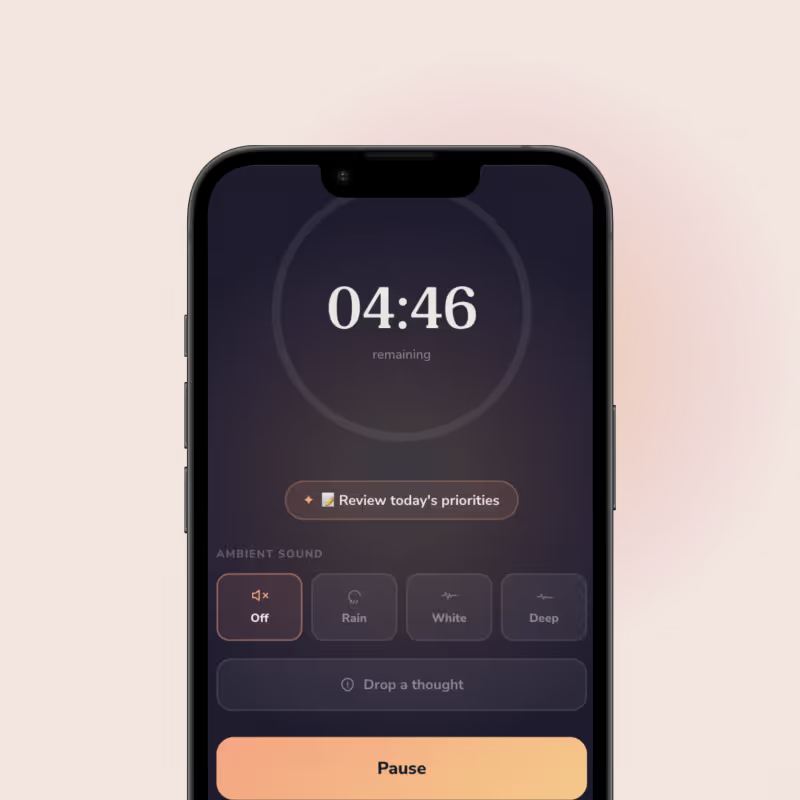
Understanding Emotional Dysregulation →RSD makes every environment feel like an audition. Lumi removes the stage. No record of missed days, no streak counter, nothing that turns opening an app into one more place you can fail. Whatever happened today — it doesn't follow you in here.


Therapy has a waitlist. Lumi doesn't. The 167 hours a week your therapist isn't available — Lumi is. Right there, whenever your brain decides it's ready.


ADHD (Attention Deficit Hyperactivity Disorder) is a neurodevelopmental condition characterized by differences in dopamine regulation and executive function. Despite the name, the core issue isn't a deficit of attention — it's difficulty regulating attention, motivation, emotion, and action. It's a neurological difference that affects how the brain initiates, sustains, and shifts focus.
Yes. There are three presentations of ADHD: predominantly inattentive (formerly called ADD), predominantly hyperactive-impulsive, and combined. Many adults — especially women — present with the inattentive type, which often goes undiagnosed because it doesn't look like the stereotypical fidgety child. Inattentive ADHD looks like daydreaming, forgetting, losing track of time, and difficulty starting tasks.
It varies, but common experiences include: knowing what you need to do and being unable to start; feeling overwhelmed by things that seem easy for others; intense emotional reactions to rejection or failure; time slipping away without warning; and an exhausting sense of working twice as hard to do half as much. Many adults describe it as "living in a fog" until they understand what's actually happening in their brain.
ADHD is one of the most well-researched neurological conditions in medicine. It's supported by decades of neuroimaging studies, genetic research, and clinical evidence. The ADHD brain shows measurable differences in dopamine receptor density, prefrontal cortex activity, and executive function performance. It is not a character flaw, a parenting failure, or an excuse — it's a real, diagnosable, treatable condition that responds to both medication and behavioral support.
Yes. Lumi is built for anyone who recognizes these experiences in themselves — whether they have a formal diagnosis or not. Many people spend years identifying with ADHD before getting a diagnosis. Lumi doesn't require a diagnosis to help. That said, if you suspect you have ADHD, we encourage you to seek an evaluation from a clinician who specializes in adult ADHD.