ADHD TIME BLINDNESS

You thought it was
5 minutes. It was 45.

Time blindness isn't carelessness or being bad at planning. It's a neurological gap in how the ADHD brain perceives time — and why "just check the clock" has never worked for you.

80%
of adults with ADHD report
significant time blindness
Barkley, Executive Functions, 2015
30 - 40%
average time underestimation by ADHD
adults vs. neurotypical peers
Barkley & Murphy, 2010
2
time states the ADHD brain operates
in: "now" and "not now"
Dr. Russell Barkley, 2012
the experience

What ADHD time blindness
actually feels like

I sat down to "quickly check one thing" before leaving. I looked up and an hour had vanished. Not metaphorically. Literally — gone. I have no idea where it went.

"
Time disappearance

The deadline is three weeks away, then two, then one — and somehow none of those felt real until I woke up the day before in a panic. The future just doesn't exist to my brain until it's tomorrow.

"
Now vs. not now

I'm always either 30 minutes early or 2 hours late. There is no in-between. I can't seem to land in the middle no matter how many alarms I set.

"
No middle ground
the neuroscience

Why the ADHD brain can't feel time

The ADHD brain has measurable differences in the prefrontal cortex — the region responsible for working memory, future awareness, and the internal sense of duration. Without strong activity in this region, time loses its texture: an hour feels like ten minutes, a deadline three weeks out feels infinitely far away, and the future doesn't generate the urgency that drives neurotypical planning.

Dr. Russell Barkley's research describes this as "now and not now" thinking. The ADHD brain doesn't experience time as a continuous gradient — it has a strong sense of this exact moment and a weak, fuzzy awareness of everything else. The future remains intellectually known but emotionally absent.

This is why willpower, alarms, and trying harder don't fix it. Time blindness is a perception problem, not a discipline problem. The fix is making time external — visible, audible, and unavoidable — rather than asking the brain to track it internally.

Prefrontal cortex underactivation

The region responsible for tracking duration and future planning has reduced activity in ADHD brains, which is why time slips past without registering.

"Now" vs. "Not now"

The ADHD brain operates in two time states — the present moment and a vague "later." Anything outside of right now feels equally distant, whether it's tomorrow or three months away.

Dopamine timing deficits

Dopamine is what generates urgency about future events. With ADHD's dopamine dysregulation, the brain doesn't fire that signal until the deadline becomes the present.

Hyperfocus distortion

During interest-based engagement, time perception collapses entirely. Two hours can pass without any sense of duration. This isn't a bug — it's how the ADHD attention system works.

the advice gap

Why typical time
management advice fails

Standard time management advice was designed for brains that can already feel time.
For the ADHD brain, most of it skips the actual problem.

What you've been told
Why it doesn't

"Just set more alarms"

Alarms fire at the deadline, not before. The ADHD brain needs lead time to transition — by the time the alarm rings, the freeze has already started. Alerts must come early, not on time.

"Use a planner"

Planners require you to maintain them — which requires the exact executive function ADHD makes inconsistent. The system works only when you're already doing well, and breaks down precisely when you need it most.

"Try harder to be on time"

Time blindness isn't an effort problem. You can't try your way into perceiving something your brain can't feel. The fix is making time external — not pushing harder against the same internal block.

an adhd companion to help

A companion that makes
time visible for you

Lumi doesn't ask your brain to track time better. It tracks time for you
proactively, with lead time, in a way that actually lands.

focus sessions

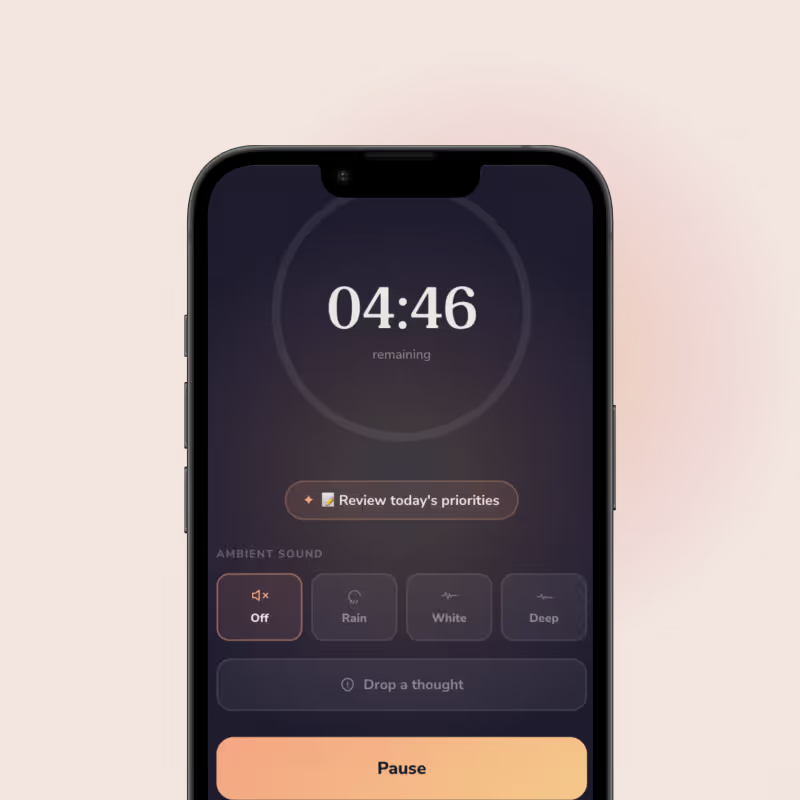
Time with a shape you can actually feel

ADHD brains don't feel time passing — they feel the panic when it's gone. Focus Sessions give you a countdown, not a clock. 15, 25, 45, or 60 minutes with ambient sound so your brain stays in the room.

Plan your day

Your day, planned and organized

Time blindness makes the day feel formless until it's over. The Day Timeline shows your calendar events, tasks, and habits in time order — so you can see exactly where you are and what's coming.

focus reminders

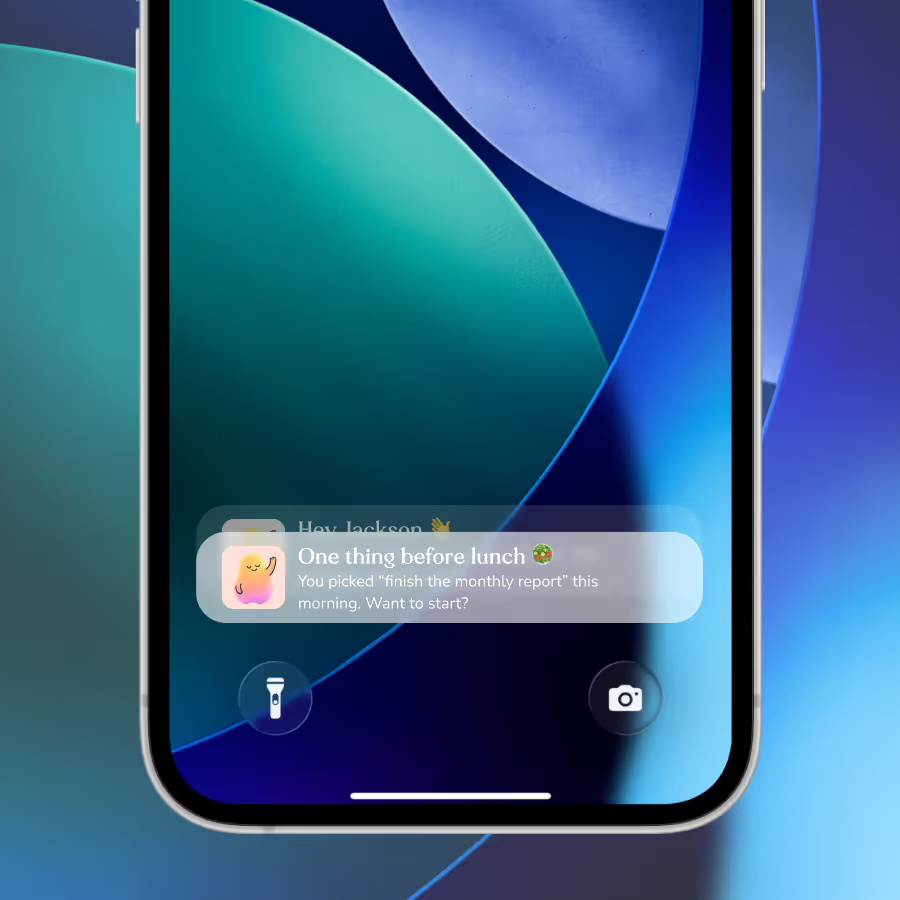
Lumi comes to mind when you've gone quiet

Most apps wait for you to open them. That doesn't work when you're frozen. Lumi notices when you've gone quiet and checks in — a gentle prompt, a reminder of what you said mattered, an invitation to just open the doc. Support that arrives exactly when paralysis hits, not just when you remember to ask for it.

proactive nudges

Built into every part
of your day

Task paralysis doesn't only strike at 9 am with a blank doc open. Lumi shows up for all the other moments it hits too.

Evening reflection

A soft close on a day that ran away

Time blindness doesn't just lose hours - sometimes it loses whole days. The evening check-in gives the day and ending so it doesn't blur into the next one.

medication reminders

The reminder that arrives when you need it

Medication timing matters and time blindness makes it easy to miss. Lumi reminds you on your schedule, in your timezone.

weekly brain report

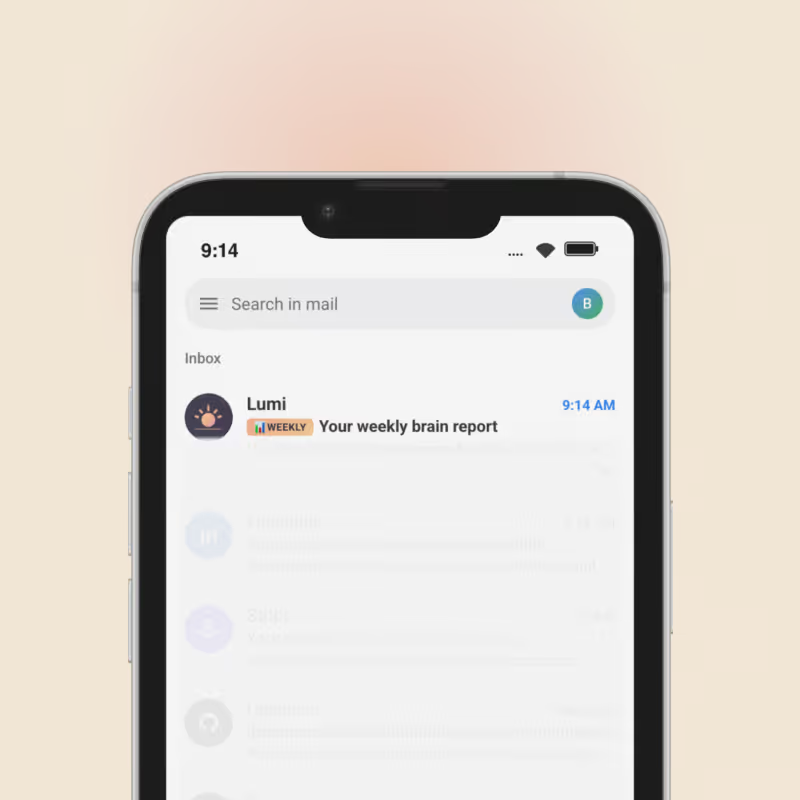
Your weekly recap, in your inbox

Time blindness makes weeks feel like one long blur. Your brain report shows the shape of it - focus time, active days, patterns - so the time you spent becomes real.

There's more to your brain
than one hard thing

Lumi is built for all of it

common questions

Frequently asked questions
about ADHD time blindness

What is time blindness in ADHD?

Time blindness in ADHD is a temporal perception deficit where the brain struggles to accurately sense the passage of time, estimate how long a task will take, or feel the future as real until it becomes the present. Coined by Dr. Russell Barkley, the term describes the ADHD brain's tendency to operate in two time states — "now" and "not now" — rather than experiencing time as a continuous flow. It is a recognized executive function deficit affecting an estimated 80% of adults with ADHD.

Is time blindness a symptom of ADHD?

Yes. Time blindness is a recognized executive function deficit associated with ADHD and is consistently identified by clinicians and researchers as a core symptom of the condition. Research by Dr. Russell Barkley has shown that ADHD adults demonstrate measurable differences in time perception, time estimation, and time reproduction tasks. While not listed as a separate symptom in the DSM-5, time blindness underlies many of ADHD's hallmark struggles — chronic lateness, missed deadlines, and inability to prepare for future events.

What does ADHD time blindness feel like?

People with ADHD describe time blindness as feeling like time runs in two settings — "now" and "not now" — with no smooth gradient between them. Common experiences include: thinking 5 minutes have passed when it has been 45, knowing a deadline is three weeks away and somehow waking up the day before, being either dramatically early or significantly late with nothing in between, and being unable to feel the urgency of a task until it becomes immediately critical. The future is intellectually known but emotionally absent until it arrives.

What causes time blindness in ADHD?

Time blindness is caused by differences in prefrontal cortex function and dopamine regulation. The prefrontal cortex is responsible for working memory, future planning, and the internal sense of duration — all of which are reduced in ADHD brains. Without strong dopamine-driven future awareness, the brain cannot generate the internal urgency signal that neurotypical brains produce when a deadline approaches. This is why external scaffolding (visual timers, transition alerts, proactive reminders) is significantly more effective than willpower or "trying harder."

How do you manage ADHD time blindness?

Effective ADHD time blindness strategies include: (1) Externalizing time — making time visible through analog clocks, visual timers, or physical countdowns rather than mental tracking. (2) Transition alerts — getting reminders before a transition, not at it, since the ADHD brain needs lead time. (3) Time anchoring — pairing routines to fixed events (after coffee, before lunch) rather than fixed clock times. (4) Body-doubling for time awareness — having an external presence reflect time back. (5) Reducing time-estimation reliance — assuming everything takes longer than you think. Lumi handles much of this automatically through Time Blindness Alerts and Transition Warnings.

What ADHD time blindness strategies actually work?

The strategies with the strongest evidence are externalization-based: make time visible, audible, and unavoidable. Visual timers (like Time Timer) outperform digital clocks because they show duration shrinking. Lead-time alerts (15 minutes before) outperform on-time alerts because they account for ADHD transition delay. Time blocking with cushion buffers outperforms tight scheduling because it builds in the consistent overrun ADHD adults experience. Apps that nudge proactively — rather than relying on the user to check — outperform passive tracking. Lumi is built specifically around these principles.

time blindness RESOURCES

Helpful articles and insights
for ADHD Time Blindness

Understanding ADHD
Time Blindness

ADHD Time Blindness

Time blindness makes minutes feel like hours and hours feel like minutes. Here's what's actually happening in the ADHD brain — and what helps.