
emotional dysregulation
Dr. Joel Nigg, ADDitude
show the same pattern
Dr. Joel Nigg, ADDitude
in DSM-5 ADHD criteria
Barkley & Nigg, ADDitude
ADHD emotional dysregulation isn't being too sensitive. It's a neurological short-circuit — emotion arrives instantly, intensely, and won't release on command.
You may be calm and happy one moment. Then, without any warning, a small trigger can flip your emotions from "green" to "red."
These children have very high levels of anger, and low levels of rebound back to baseline — when they get angry, they can't get over it.
Emotions may arrive quickly, feel especially intense, last longer than expected, or be hard to shift once activated. Emotional dysregulation isn't a character flaw.
Emotional regulation depends on the prefrontal cortex — the same brain region that handles attention, working memory, and impulse control in ADHD. When that system runs under-resourced, the emotional brake doesn't fire on time. The emotion arrives in full force before the regulating part of the brain can step in.
Dr. Russell Barkley's research describes this as "emotional impulsiveness" or DESR — a top-down deficit, not a bottom-up flood. The emotion isn't bigger than other people's. The mechanism that normally smooths it down is just slower or weaker.
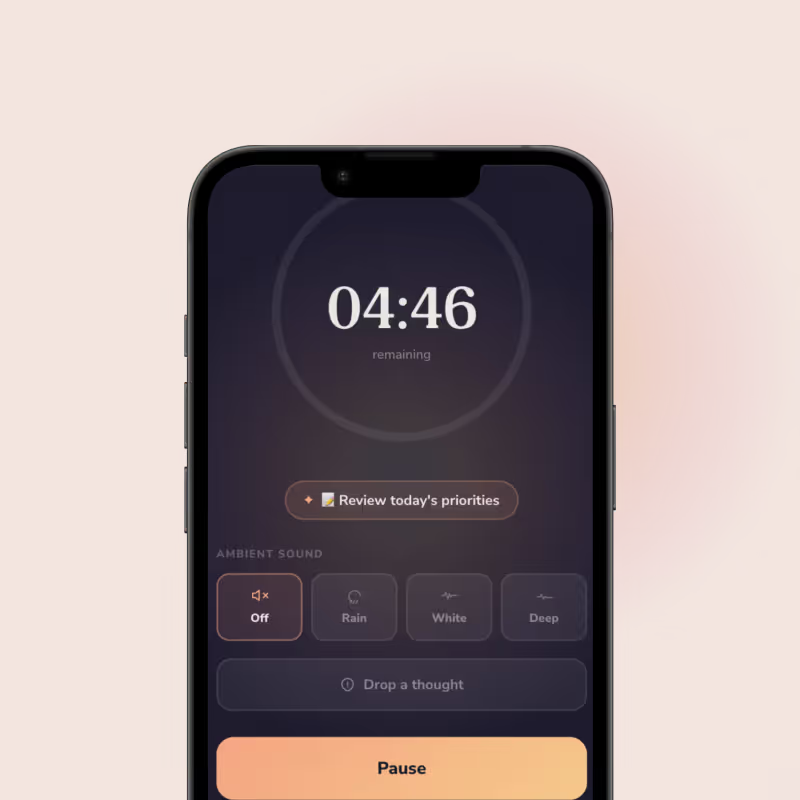
This is why willpower doesn't work. By the time you "decide" to calm down, the response has already happened. The interventions that help work with the nervous system — anticipating triggers, shifting attention before the spike, and finding co-regulation from outside yourself when the brake fails inside.
The region that normally smooths emotional responses fires inconsistently, so the emotional brake arrives too late or not at all.
A top-down regulation deficit — the rational override system that would normally pause and assess can't engage in time.
Once an emotion fires, the ADHD nervous system takes longer to return to neutral. The state lingers far past the trigger.
Standard ADHD meds barely touch emotional dysregulation, and may dampen all emotion in the process. Behavioral scaffolding matters more here.
Most emotional regulation advice assumes a working brake.
For ADHD adults, the brake is the missing piece and trying harder
doesn't fix mechanical underactivation.
"Typical ADHD medication helps with core symptoms, but has only modest benefits on emotional dysregulation for adults with ADHD." — Dr. Joel Nigg. Stimulants may also leave you feeling "robot-like" and emotionally bland.
"Learning about coping skills without practice, or trying some self-help without professional consultation is generally not as effective." — Dr. Joel Nigg. Reading the techniques is not the same as having them available in the moment the emotion fires.
Emotional dysregulation is "noticeably missing from diagnostic criteria for ADHD" yet research shows ADHD has the strongest link to it of any condition. The criteria are incomplete — your experience is real and well-documented.
Lumi can't override your nervous system. But it can be the calm presence
that helps you find baseline faster — anticipating triggers, catching patterns,
and staying steady when your emotional brake doesn't.
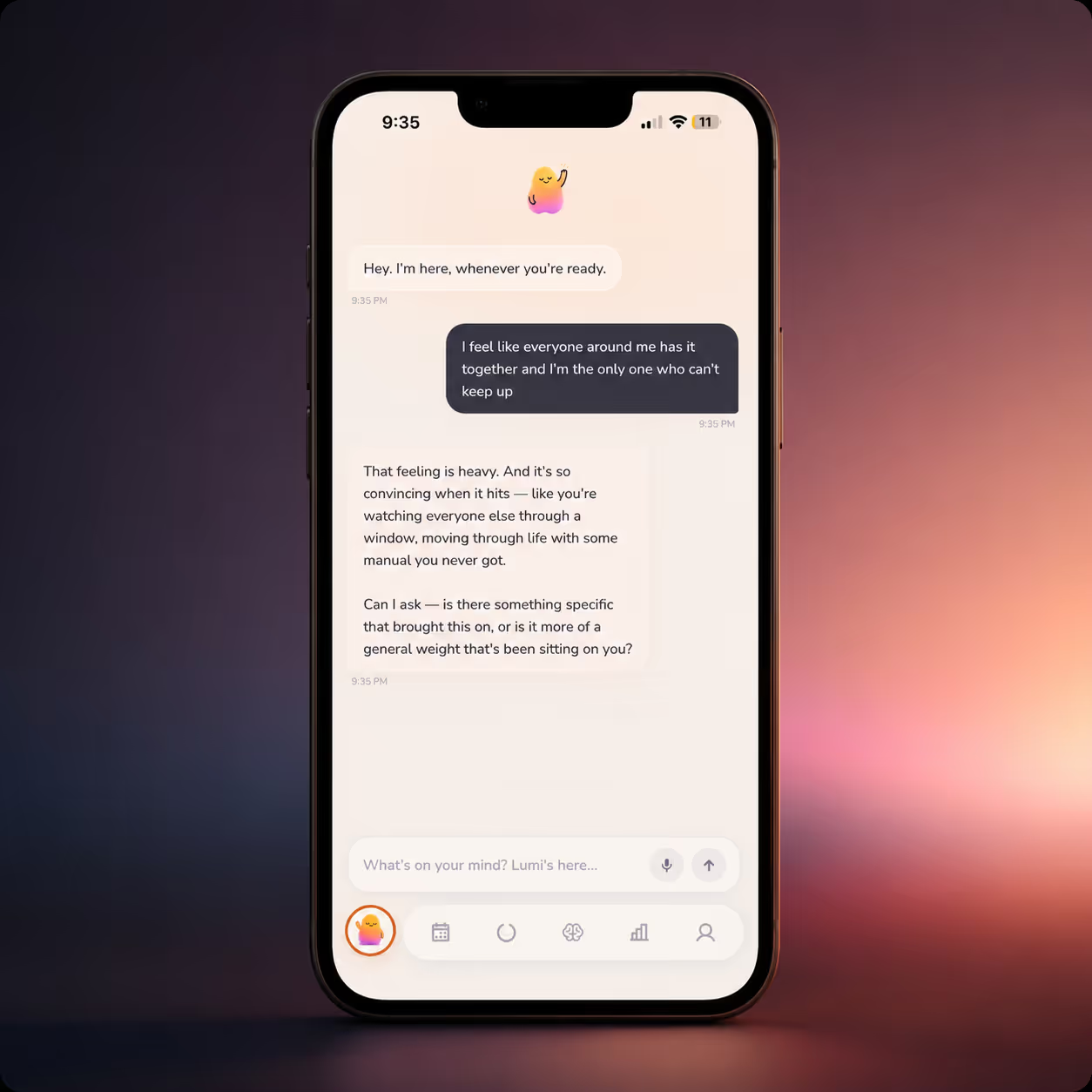
Some moments don't need advice; they need someone to show up. Tap "having a hard moment?" and Lumi opens - no prompts, no questions, no pressure to explain yourself. Just presence, at 2 am or 2 pm, whenever the 167 hours between therapy appointments feels the longest.


When you type "I feel like a failure" or "I can't do this anymore", Lumi doesn't respond with a task list. It detects the emotional weight behind your words and shifts - softer tones and a slower pace, all with no agenda. ADHD and emotional dysregulation aren't separate problems, and Lumi treats it as such.
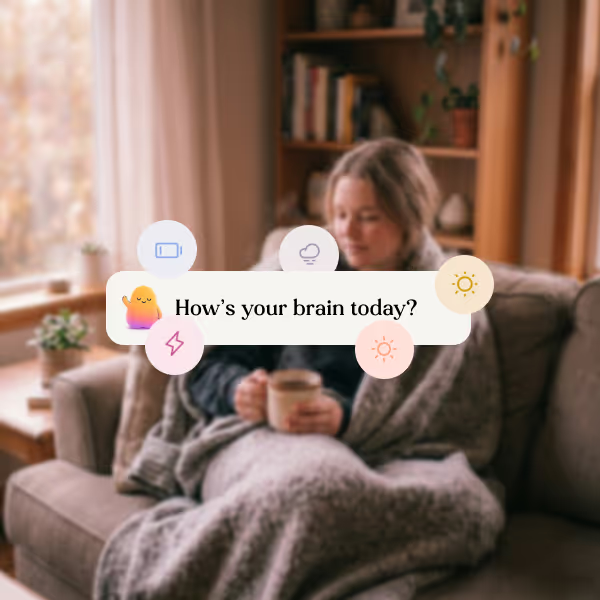
A short reply can feel like a verdict. A missed invite can feel like proof. RSD doesn't distort feelings — it amplifies them past reason. Lumi asks how you're actually doing before anything else. Not to fix it. Just to name it — and put a second between the feeling and what happens next.


Lumi is built for all of it
Emotional dysregulation in ADHD is a neurological pattern in which emotional responses arrive quickly, feel disproportionately intense, last longer than expected, and resist returning to baseline. Dr. Russell Barkley calls this "deficient emotional self-regulation" (DESR) or "emotional impulsiveness." According to research summarized by Dr. Joel Nigg, approximately 70% of adults with ADHD report problems with emotional dysregulation. It is caused by the same prefrontal cortex and dopamine differences that drive other ADHD symptoms — the brain's emotional braking system fires inconsistently or too late.
Yes, though it is not formally listed in the DSM-5 criteria for ADHD. Dr. Russell Barkley and Dr. Joel Nigg, two leading ADHD researchers, both describe emotional dysregulation as "noticeably missing from diagnostic criteria for ADHD" despite being central to the experience. Research consistently shows ADHD adults experience disproportionate problems with anger, irritability, and emotional regulation even when controlling for other co-occurring conditions, and ADDA notes ADHD has "the strongest link" to emotional dysregulation of any mental health condition.
Common examples named by ADDA and ADDitude include: anger outbursts triggered by minor frustrations, crying in response to a wide range of feelings (including positive ones), unpredictable mood swings, low tolerance for frustrating situations, difficulty soothing or calming yourself, episodes that feel "tantrum-like" followed by chronic underlying negative feelings, frequent reactive mood changes throughout the day, and emotions that are "blown out of proportion" to the triggering event. Many ADHD adults describe their emotional experience as "all or nothing" — green straight to red, with no yellow light in between.
Research by Dr. Russell Barkley shows that ADHD emotional dysregulation "uniquely predicts" a wide range of relationship outcomes including social rejection, interpersonal hostility, marital dissatisfaction, road rage, DUI incidents, job dismissals, and impulse buying. The challenge in relationships is rarely a lack of love — it is that the emotional response arrives faster than the regulating part of the brain can intervene. Partners may experience the ADHD person as "overreacting" or "hot-and-cold," while the ADHD person experiences themselves as flooded by an emotion they can name but cannot stop.
Standard ADHD stimulant medication has "only modest benefits on emotional dysregulation for adults with ADHD," according to Dr. Joel Nigg in ADDitude. Dr. Russell Barkley further notes that stimulants "appear to quell and even dampen the limbic system, sometimes leading to complaints from patients about having robot-like, bland emotions." Most experts recommend combining medication (when appropriate) with behavioral strategies — anticipatory coping, attention-shifting techniques, structured pause-and-breathe practices, co-regulation through trusted support, and dialectical behavior therapy approaches focused specifically on emotion regulation.
Effective ADHD emotional dysregulation treatment combines several approaches: (1) Anticipatory coping — identifying likely triggers and devising an exit plan before encountering them. (2) Attention-shifting practices — moving focus away from the emotional trigger before the response escalates. (3) Structured pause techniques like 7-11 breathing or the R.A.I.N. method (Recognize, Allow, Investigate, Non-identification). (4) Co-regulation — having a calm external presence (a person, an AI companion, a routine) to help the nervous system find baseline. (5) Behavioral therapy from a clinician familiar with ADHD, particularly DBT skills. Lumi provides scaffolding for several of these — particularly co-regulation and pattern recognition — between professional sessions.