
significant task initiation difficulty
CHADD, 2022
than neurotypical peers
Barkley, Executive Functions, 2015
missing deadlines or losing jobs
ADDitude Annual Survey, 2023
Task paralysis isn't a character flaw. It's what happens when an ADHD brain can't generate the dopamine needed to initiate — even when you desperately want to start.
I sit down to work and just… can't. The task is right there on my list. I know exactly what I need to do. I've known for two hours. But I literally cannot make myself start it.
I'll spend three hours cleaning my entire apartment, reorganizing my desk, doing literally anything else — and I know the whole time I'm avoiding. It's not procrastination. My brain just won't let me start the thing.
The more important a task is, the harder it is to start. A quick email? Fine. The presentation my entire quarter depends on? I'll stare at a blank screen for four hours and get nothing done.
ADHD brains have a dopamine regulation problem — not a motivation problem. Neurotypical brains generate enough dopamine to initiate tasks by thinking about future rewards. ADHD brains need dopamine now, in the moment, to fire up the executive function system.
Task initiation requires the prefrontal cortex to override the limbic system's resistance. With ADHD, that override signal is weaker — which is why the task feels literally impossible to start, even when you want to, even when stakes are high.
This is not a willpower issue. It's not a discipline issue. It's a neurological barrier that standard productivity advice was never designed to solve.
The reward signal needed to initiate tasks doesn't fire at the right time — making starting feel impossible even for tasks you care about.
Important tasks carry emotional weight (fear of failure, perfectionism) which amplifies freeze. The higher the stakes, the stronger the block.
ADHD brains run on interest and novelty, not importance or urgency. If a task isn't interesting or new, the brain won't engage — regardless of consequences.
Standard productivity advice is designed for neurotypical brains.
It doesn't account for the dopamine deficit at the root of task paralysis.
Smaller steps still require initiating. If the problem is starting, making there be more starts doesn't help — it can make the overwhelm worse.
The timer trick still requires you to start the task. It skips the actual barrier — which isn't time, it's the neurological cost of the first action.
A clean desk doesn't generate dopamine. Environment is rarely the barrier. The block is internal — and requires a dopamine-friendly trigger, not a quiet room.
Standard productivity advice is designed for neurotypical brains.
It doesn't account for the dopamine deficit at the root of task paralysis.
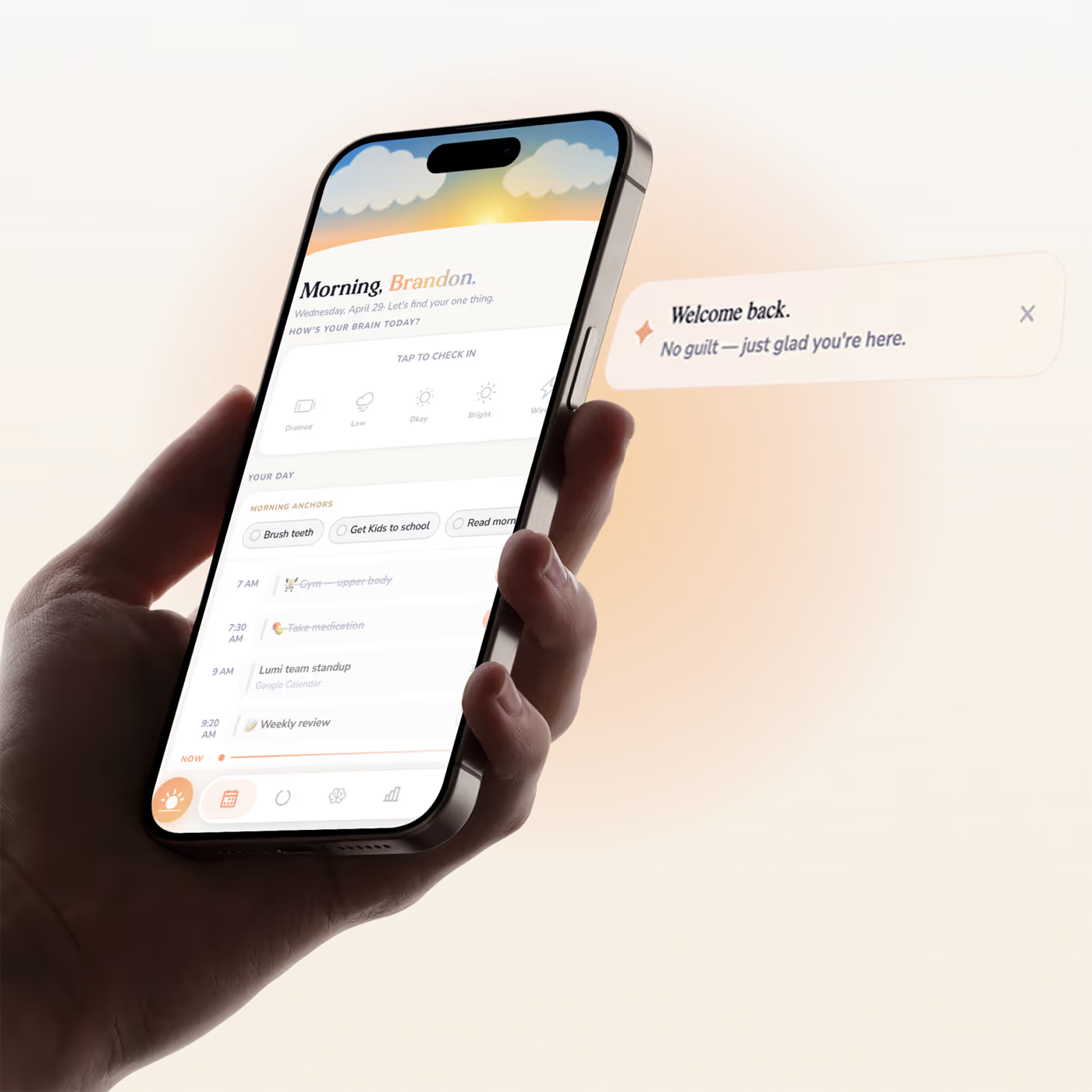
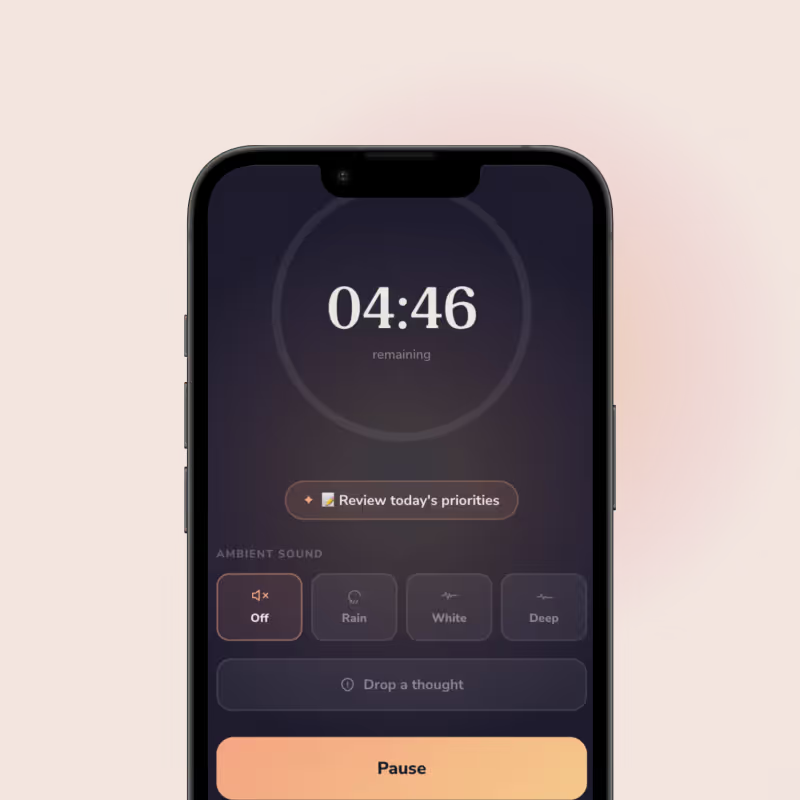
Staring at fifty tasks is one of the fastest ways to freeze. One Focus Card shows you exactly one — already chosen by Lumi based on your mood, your week, and what actually needs to happen today. Nothing else in view until you're ready for it.
Try Lumi free for 7-days


When your brain is frozen, the ask can't be "open your laptop, find the task, read the brief, and start." That's twelve decisions before you've done anything. One-tap Start collapses all of it — one tap activates focus mode, surfaces the single task Lumi already chose for you, and clears everything else away. No setup. No choosing. Just a door that's already open.
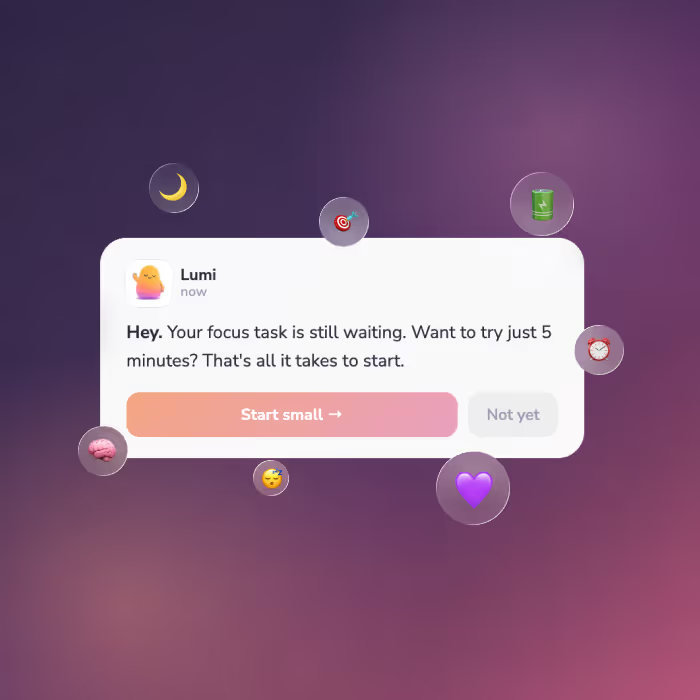
Try Lumi free for 7-daysMost apps wait for you to open them. That doesn't work when you're frozen. Lumi notices when you've gone quiet and checks in — a gentle prompt, a reminder of what you said mattered, an invitation to just open the doc. Support that arrives exactly when paralysis hits, not just when you remember to ask for it.
Try Lumi free for 7-days

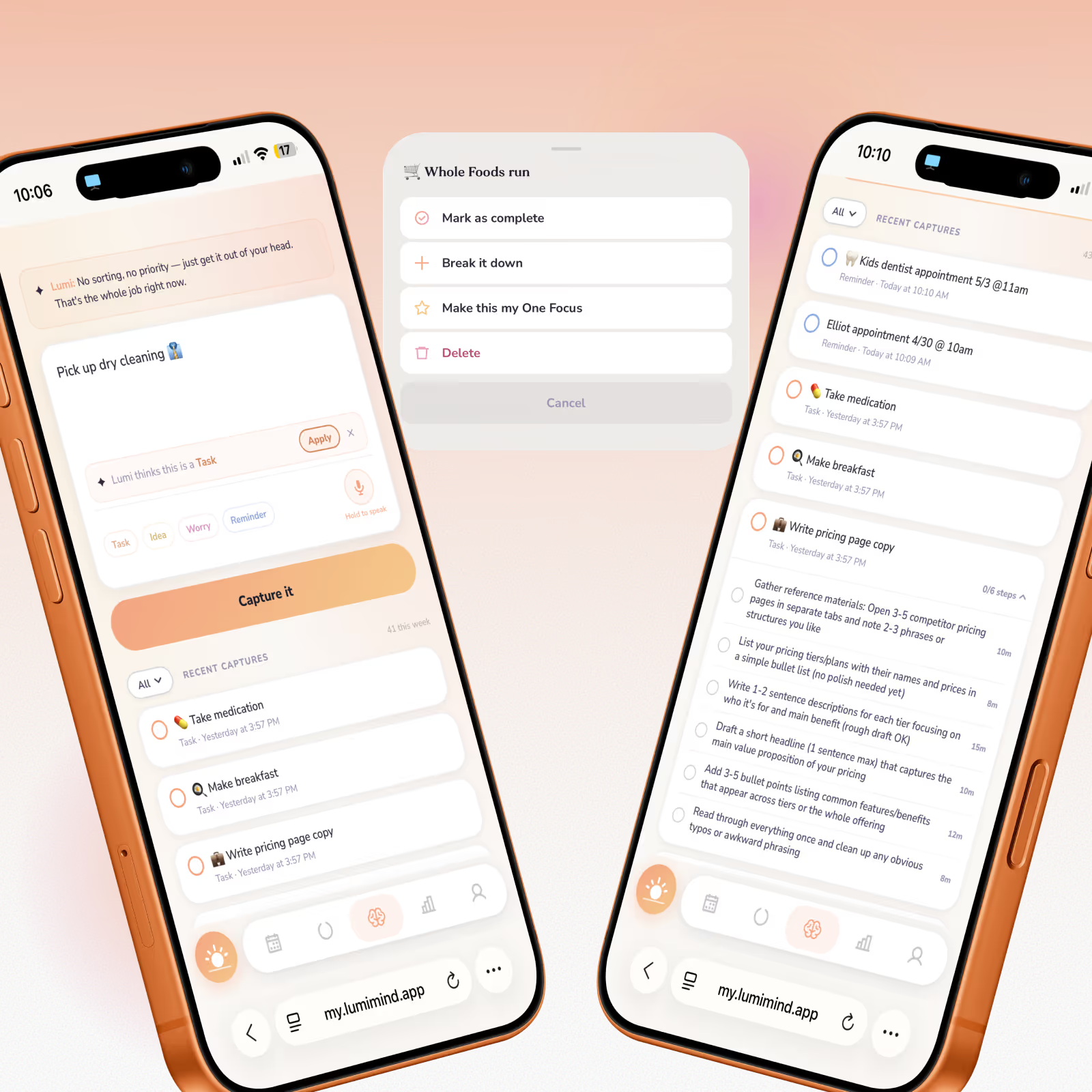
Task paralysis doesn't only strike at 9 am with a blank doc open. Lumi shows up for all the other moments it hits too.
Lumi is built for all of it
ADHD task paralysis is the inability to begin a task despite wanting to — a neurological freeze state, not a character flaw. It occurs when the ADHD brain fails to generate the dopamine-driven initiation signal needed to start, particularly on tasks that feel overwhelming, ambiguous, or high-stakes. Unlike procrastination, it is not a choice. The person is genuinely trying to start and cannot. It is one of the most commonly reported experiences among adults with ADHD, affecting an estimated 90% of the population according to CHADD (2022).
Knowing what to do and being able to start are controlled by different brain systems. Awareness uses conscious cognition. Initiation requires dopamine-driven motivation signals from the basal ganglia and prefrontal cortex. In ADHD, those signals are inconsistent — which is why you can explain exactly what needs to happen while being completely unable to begin. This gap between knowing and doing is one of the most misunderstood aspects of ADHD. It is not a willpower problem. It is a neurological mismatch between intention and activation.
Procrastination is a choice — you delay a task in favor of something more immediately rewarding. ADHD task paralysis is not a choice. It is a freeze state where the brain cannot generate the signal needed to begin, even with no competing task and a genuine desire to start. Someone procrastinating chooses not to start. Someone in task paralysis is actively trying and failing — often while experiencing intense shame about the gap. Research by Dr. Russell Barkley describes this as a deficit in self-regulation, not motivation.
The most effective strategies for overcoming ADHD task paralysis share one thing: they reduce the size of the ask so the brain's initiation threshold is met. (1) Shrink the first step — not "write the report" but "open the document." (2) Use body-doubling — working alongside another person or an AI companion to create external anchoring. (3) Remove the decision entirely — let something else surface the one task to start. (4) Lower the bar — beginning is the goal, not finishing. According to ADDitude (2023), body-doubling improves task follow-through in approximately 75% of adults with ADHD who try it.
Stimulant medication can reduce task paralysis by increasing dopamine availability in the prefrontal cortex, making initiation easier. Studies show stimulants are effective for executive function symptoms in 70–80% of adults with ADHD (Journal of Attention Disorders, 2020). However, medication does not work during off-hours, does not address the emotional components — shame, perfectionism, fear of failure — that amplify freeze, and does not build the behavioral scaffolding needed for long-term change. Most ADHD specialists recommend medication combined with external support systems, not medication alone.