frequent hyperfocus episodes
Hupfeld, Abagis & Shah, 2019
episode in ADHD adults
Ozel-Kizil et al., 2016
vs. neurotypical adults
Hupfeld, Abagis & Shah, 2019
ADHD hyperfocus isn't disciplined work — it's your brain locking onto something so completely that hours, meals, and meetings disappear, then you crash.
I sat down at 2pm to "just figure something out." I looked up and it was 9pm. I hadn't eaten, hadn't moved, hadn't responded to anyone. The day was just gone.
My partner stood next to me trying to get my attention for what they said was 10 minutes. I genuinely did not hear them. Not ignoring — not registering. They've stopped taking it personally. I still feel terrible.
If hyperfocus is a runner's high, then feeling depressed and depleted afterward is rolling your ankle right after crossing the finish line. The amazing part everyone talks about — and the part nobody warns you about.
The ADHD brain has a chronically under-stimulated dopamine system. Most tasks don't generate enough dopamine to hold attention — which is why starting feels impossible. But when the brain finally encounters something that does deliver dopamine — through novelty, urgency, challenge, or interest — it locks on completely. That lock-on is hyperfocus.
This is why you can't summon hyperfocus on demand and can't apply it to the task you actually need to do. The brain isn't choosing what to focus on. It's responding to where the dopamine is — and the prefrontal cortex's normal "step back and check in" function goes quiet during the episode.
The crash afterward isn't laziness. Sustained dopamine activation depletes neurotransmitter reserves and leaves the brain in a recovery state — sometimes for hours, sometimes for days. The hyperfocus didn't happen instead of rest. It traded against rest you had to take later.
The ADHD brain locks onto stimuli that finally deliver enough dopamine. This makes hyperfocus involuntary — you can't choose when it fires or what it fires on.
The brain region that normally interrupts you to notice hunger, time, or other priorities is suppressed during hyperfocus. You stop self-monitoring entirely.
External stimuli — your name being called, phone buzzing, hunger signals — get filtered out. This isn't ignoring. The signal genuinely doesn't reach awareness.
Sustained dopamine output leaves the brain in a recovery state. Executive function, decision-making, and emotional regulation can be impaired for hours or days afterward.
Most advice treats hyperfocus as a tool you can wield. The reality is closer to a
current you can't fight — and the goal is steering, not summoning.
You can't direct hyperfocus. It fires on what the brain finds dopamine-rewarding — usually not the task you're supposed to do. Trying to force it onto your actual work is exactly when it refuses to come.
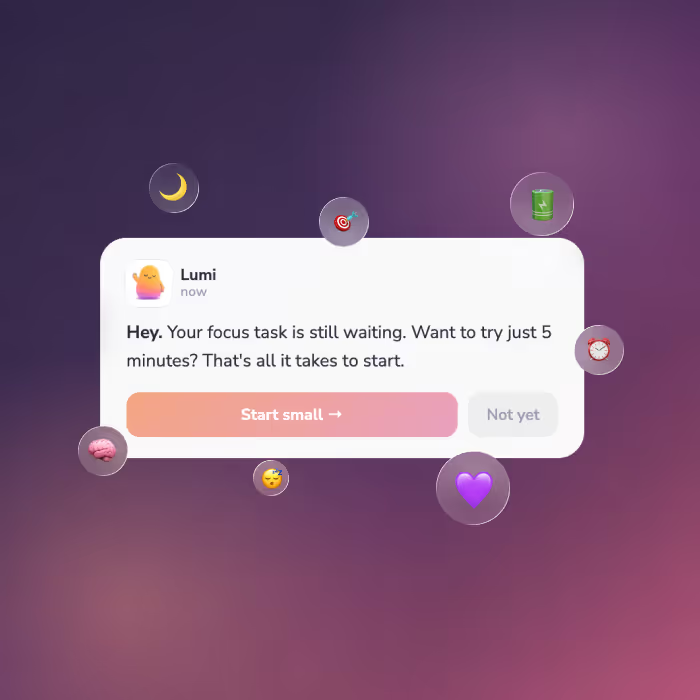
Single alarms don't break through hyperfocus. The brain's sensory gating filters them out the same way it filters out everything else. What works is escalating, persistent, in-context cues — not one beep that gets dismissed.
This framing ignores the cost. Hyperfocus skips meals, breaks relationships, blows past appointments, and leaves you depleted. Embracing it without managing the crash is a recipe for burnout.
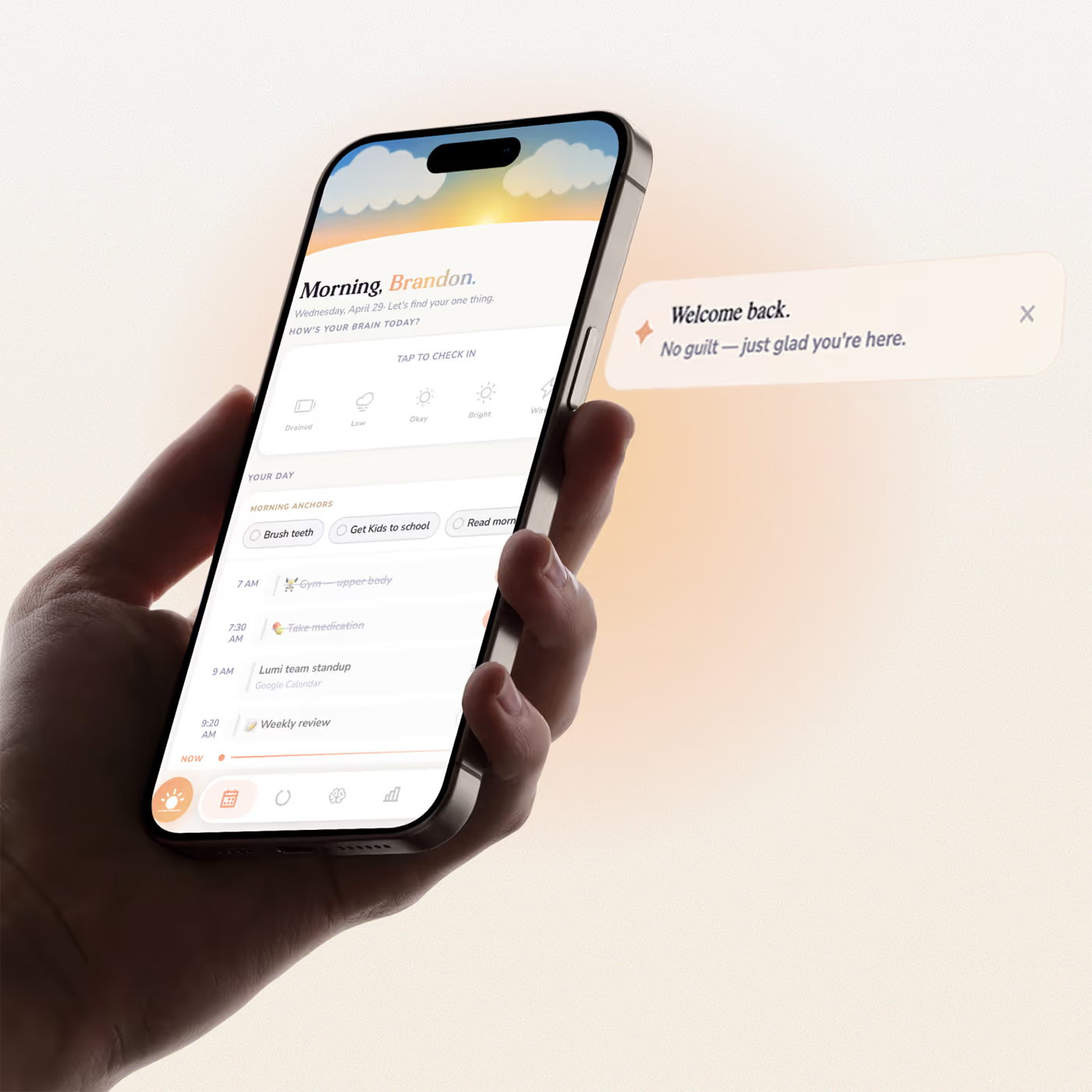
Lumi doesn't try to stop your hyperfocus. It watches the clock for you, lands you softly,
and protects the recovery on the other side — so the crash doesn't take the next day with it.
When Lumi detects you've been locked in far longer than planned, it doesn't just cut you off — it helps you land. Recovery Mode walks you back down gently so the crash doesn't hit as hard.


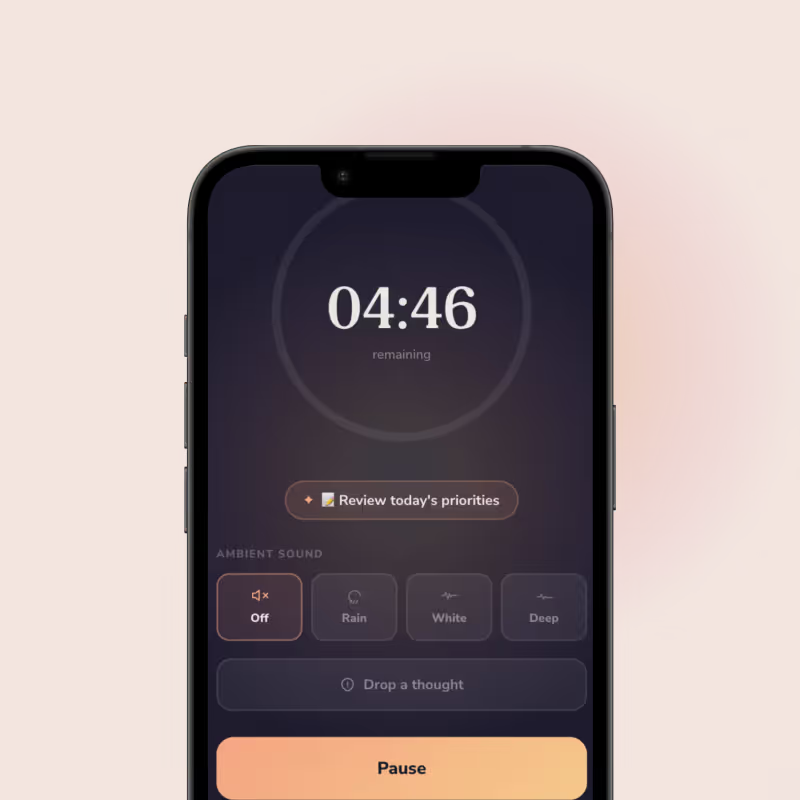
ADHD brains regulate differently when they're not alone. Lumi sits with you through every focus session — present, available, not distracting. Start a task and Lumi opens a quiet thread at the bottom. It's there if you need it. It doesn't demand anything if you don't.
One hyperfocus session is fine. Three in a row with no recovery time isn't. Lumi tracks your patterns across sessions and reaches out proactively — before exhaustion becomes a crash.


Task paralysis doesn't only strike at 9 am with a blank doc open. Lumi shows up for all the other moments it hits too.
Lumi is built for all of it
Hyperfocus in ADHD is a state of intense, prolonged absorption in a single task — often lasting hours — accompanied by loss of time awareness, reduced response to external stimuli, and difficulty disengaging. It is driven by interest-based dopamine activation in the ADHD brain, which means it cannot be summoned on demand and tends to occur with novel, urgent, challenging, or personally compelling tasks. Hyperfocus is widely recognized by ADHD specialists as a hallmark feature of the condition, distinct from neurotypical "flow state" in its involuntary onset and the significant crash that follows.
Yes. While hyperfocus is not listed as a formal DSM-5 symptom, it is widely recognized by ADHD researchers and clinicians as a core feature of the condition. Studies by Hupfeld, Abagis, and Shah (2019) and Ozel-Kizil et al. (2016) document that adults with ADHD experience hyperfocus more frequently and more intensely than neurotypical adults. It results from the same dopamine dysregulation that causes other ADHD symptoms — the brain locks onto interest-based stimulation because it provides the dopamine signal it normally lacks.
Yes. Hyperfocus is directly caused by the same neurological differences that drive other ADHD symptoms. The ADHD brain has a chronically under-stimulated dopamine system, so when it encounters a task that finally provides sufficient dopamine — through interest, novelty, urgency, or challenge — it locks on completely. This is why ADHD adults can spend 6 hours on a hobby project but cannot start a 10-minute task they find boring. Hyperfocus is not a separate phenomenon from ADHD; it is ADHD's reward system finding what it has been searching for.
Yes. ADHD hyperfocus on a person is common, especially in early relationships or intense friendships. The novelty, emotional intensity, and dopamine reward of new connection can trigger the same hyperfocus state that other interests do — leading to constant thoughts about that person, prioritizing them above other responsibilities, and experiencing intense emotional shifts when their attention is reciprocated or withdrawn. This often fades when the relationship becomes stable, which is sometimes mistaken for losing interest. It is a known pattern in ADHD relationships and not a reflection of true feeling.
ADHD adults describe hyperfocus as time disappearing — sitting down to work on something at 2pm and looking up to find it is suddenly 8pm with no memory of the hours in between. Common experiences include: not noticing hunger, thirst, full bladder, or background sounds; ignoring or not hearing people calling your name; feeling totally absorbed and energized while in it; and feeling depleted, foggy, and irritable when forced to come out of it. The transition out of hyperfocus is often more disorienting than the focus itself.
Effective ADHD hyperfocus management is not about preventing it — it is about creating soft landings and protecting basic needs. Strategies include: (1) Setting external alerts that won't be ignored mid-flow, especially for transitions, meals, and bedtime. (2) Pre-flow setup — water, food, and a clear stopping point ready before you start. (3) Recovery time built into the schedule afterward, not back-to-back tasks. (4) Companion check-ins from outside yourself, since you cannot self-monitor while in the state. (5) Avoiding caffeine or stimulant timing that extends episodes past sustainable limits. Lumi is built around proactive nudges and recovery mode for exactly this.