
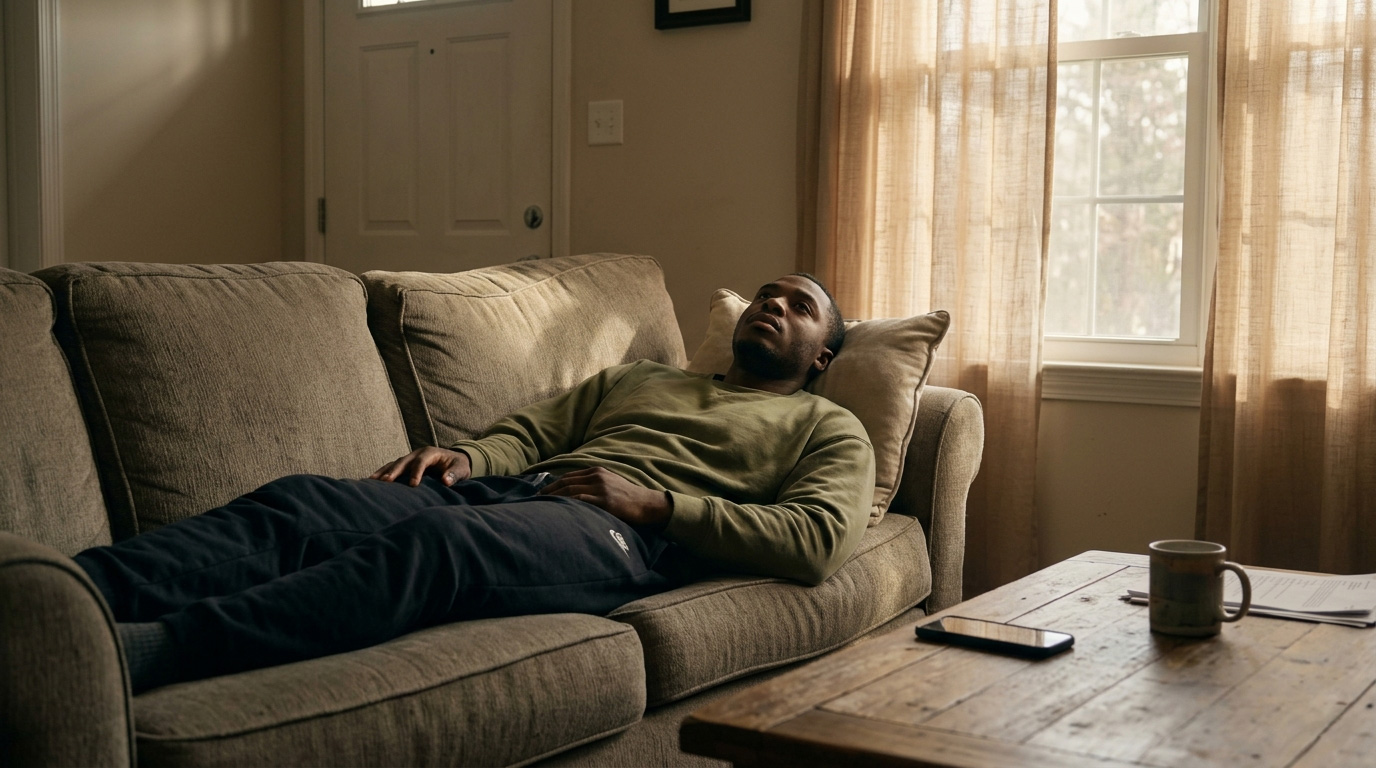
There's a version of exhaustion that a night of sleep doesn't fix.
You wake up after eight hours and feel exactly as depleted as when you went to bed. The list of things you need to do is sitting right there, unchanged — and you cannot make yourself care about any of it. Not because you don't want to. Because something more fundamental has stopped working.
This is ADHD burnout. And it is not the same as being tired.
What ADHD Burnout Actually Is
ADHD burnout is the result of your nervous system running out of fuel after a sustained period of overexertion, masking, or chronic demand.
ADHD brains have a reduced executive function baseline. Everyday tasks — sending emails, making decisions, managing time, regulating emotions — require more active cognitive effort than they do for neurotypical brains. Most ADHD adults develop extensive strategies to compensate: double-checking everything, setting aggressive reminders, working harder to appear "together." This is called masking.
Masking works, until it doesn't. It depletes the tank without ever refilling it. When the tank hits empty — not just low, but empty — the result isn't tiredness. It's a collapse.
ADHD burnout can look like:
- Inability to do ordinary tasks (grocery shopping, responding to texts, opening mail) that normally take minutes
- Cognitive fog — difficulty organizing thoughts, retrieving words, making small decisions
- Emotional flatness or heightened reactivity, with a lower threshold for overwhelm
- Physical symptoms: chronic fatigue, disrupted sleep, headaches, digestive issues
- A deep sense of not recognizing yourself: "I woke up and wondered where I'd gone"
Why ADHD Makes Burnout More Likely
Consider what's required to get through a typical workday with ADHD: Managing time perception that doesn't naturally track duration. Filtering sensory input that doesn't automatically tune out. Regulating emotional responses that arrive at a higher intensity. Initiating tasks that won't start without an external trigger. And then — for many — doing all of this while appearing entirely unaffected.
The ADHD tax is real. Pay it long enough without adequate recovery, and burnout isn't a risk. It's a certainty.
Women with ADHD face this particularly acutely. Many were diagnosed late — spending years believing the problem was a character flaw, not a neurological difference. The masking tends to run deeper, the self-blame accumulated longer.
Signs You're in Burnout
You're exhausted but can't stop - The burnout cycle often involves pushing through depletion because rest feels like failure. The weekend comes, and you can't.
Tasks that used to be automatic now feel impossible - Doing laundry. Cooking. Responding to a friend's text. If these feel like genuine obstacles — not laziness, but insurmountable friction — your executive function is depleted.
You're more reactive and more withdrawn simultaneously - Small things set you off. Bigger things barely register. Emotional regulation requires executive function, and when executive function crashes, stability goes with it.
You've stopped caring about things you usually care about - Not a mood fluctuation — a sustained, flat loss of interest in work, relationships, hobbies.
Everything takes longer and costs more - A task that would normally take 20 minutes takes two hours and leaves you needing to lie down.
What Recovery Actually Looks Like
Here's what recovery from ADHD burnout is not: adding a morning routine, starting a journaling habit, or committing to a new productivity system.
Adding demands to a depleted system doesn't fill the tank. It drains it faster.
Genuine recovery requires a reduction in demands — often for weeks or months.
Reduce decision fatigue - During burnout, decisions are expensive. Pre-decide everything you can: meals, what to wear, the shape of the day. Some people create a "burnout menu" — a short list of pre-approved low-effort options. No decisions, just reference.
Low-output activities - Rest during burnout doesn't mean productivity with lower stakes. It means genuinely low-output: walking without a destination, watching something undemanding, building a puzzle. Activities that provide dopamine without deadline pressure.
Stop making up for lost time - When you have 10% capacity back, the urge is to spend it catching up — which crashes you again. Recovery requires actually resting at 10%.
Reduce sensory and social load - Overstimulation is expensive for ADHD brains. Quiet, low-stimulation time is not withdrawal — it's medicine.
The Shame Spiral That Makes It Worse
The biggest obstacle to recovery isn't the burnout itself. It's the shame cycle alongside it.
Burnout happens → shame kicks in → shame depletes what little capacity is left → the depletion deepens the burnout → repeat.
ADHD adults have often been told — explicitly and implicitly — that their struggles reflect a lack of discipline or character. Burnout can feel like confirmation of the worst things they've believed about themselves. In that state, rest doesn't feel like recovery. It feels like giving up.
But the ADHD nervous system does not respond well to pressure when it's depleted. Pushing through does not work during burnout. It extends it.
Rest is not failure. Needing more recovery time than a neurotypical person isn't a deficiency. It's a feature of the nervous system you have.
How Lumi Approaches ADHD Burnout
Lumi was built to recognize burnout — not just respond to it.
When your patterns shift, when you're running on empty, Lumi doesn't add to your list. It reduces what it's asking of you. Shorter messages. Simpler options. No open-ended questions when yes/no will do.
Lumi doesn't count the days or reference what you haven't done. It doesn't suggest a new system or ask whether you've tried meditating.
It says: "You don't have to push right now. Your brain is telling you it needs to rest. That's not failure."
And it stays there — unjudging, no agenda — for as long as you need.
[Start Free with Lumi →]
Sources: ADDA, ADDitude Magazine, Neurodivergent Insights. Lumi is not a substitute for mental health treatment. If you are in crisis, please contact the 988 Suicide & Crisis Lifeline.


